























 Share
Share
How did you design this imaginary house?
First, I carefully explored the Marazzi collections and examined the different shapes, types, and shades available, imagining how they would look in the various rooms. It wasn’t difficult; the products are very versatile and work extremely well together. In most cases, the process started with a single object and then expanded first to the rest of the room and then to the entire house—a cohesive space where architecture and furniture blend perfectly. Often my projects work like this: they do not take shape all at once but grow and develop organically, following a sort of movement through the space. One room or object inspires the next, usually progressing from the inside out. I don’t like when a house project is too defined or divided into precise compartments.
How did you choose which Marazzi tiles to use?
I’d say it was a natural process, because the tiles cover an incredibly rich range of colors—from black to green, from brown to terracotta—yet at the same time, they all fall within a palette: earth tones, sharing a connection with nature. Some rooms play with warm colors, others with cooler shades, and yet I believe that as you move through this house, you would feel a sense of continuity: the reference to the natural environment ties all the spaces together. The Marazzi catalog offers great flexibility in terms of scale, which on one hand allowed me to be very creative and attentive to the smallest details, and on the other hand gave me the possibility to choose the best option for each room.
Which room did you start with?
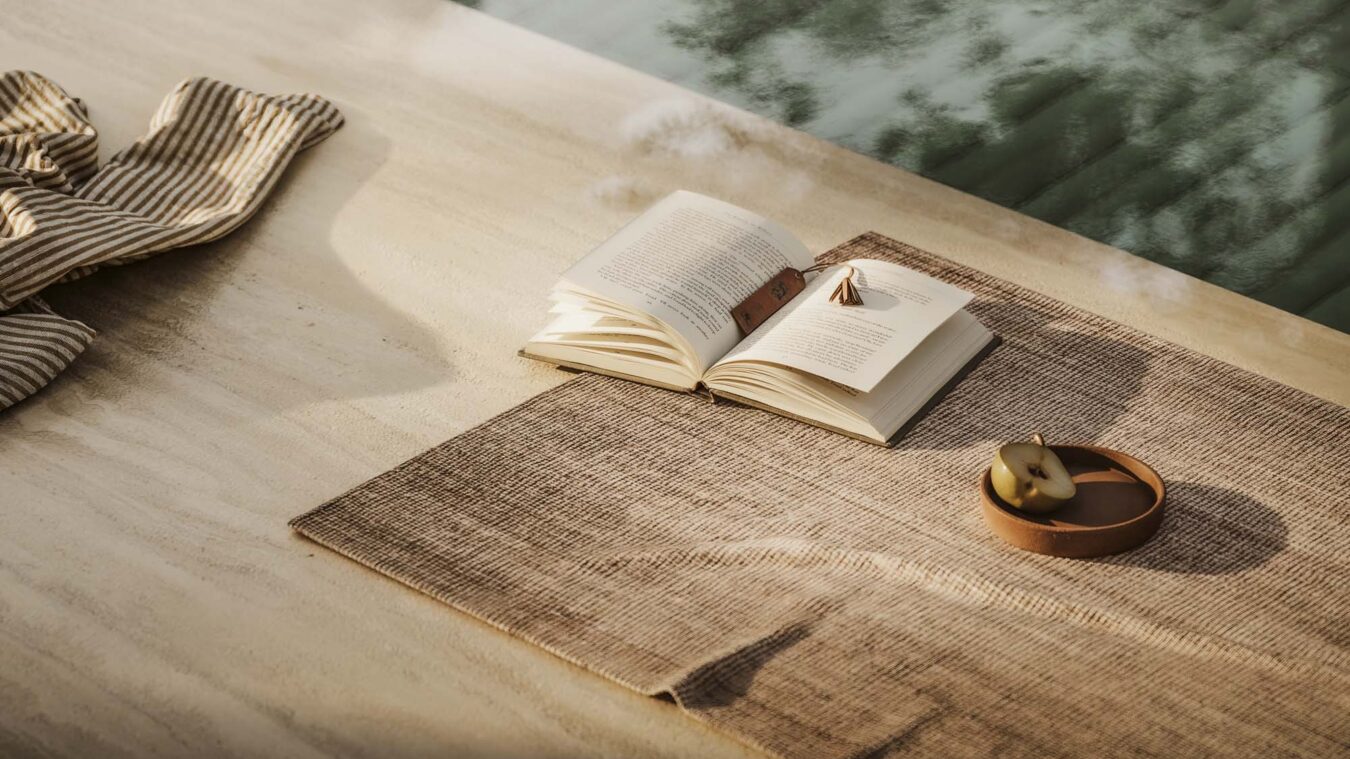
The studio, where there is practically no furniture. Just a large central table—the absolute protagonist—that can serve various purposes, and, along one side, a bookshelf that doesn’t take up too much space. I imagined fairly neutral, matte-finished walls, to let the light fill the space as much as possible and create a sort of blank, empty canvas. Studios can become quite chaotic, crowded with objects. For the floor, instead, I chose Crogiolo ArtCraft Argilla: the inspiration comes from those old artists’ studios scattered across southern Europe, with white walls and terracotta tiles everywhere. Wonderful.
Between the slender cylindrical uprights of the bookshelf, there is space for some artworks, while architectural drawings can be seen on the table. They are about this very house, as if I had designed it myself right in that studio.

Let’s move on to the next room.
The living room is a clean and essential space, but playful touches and design icons are not lacking. To play with reflections, the base couldn’t be too light. At the center, the conversation pit in Vero Quercia recalls Italian design from the ’70s and ’80s. The central table, instead, is in Crogiolo Terramater Cotto. For the walls, I chose a shade slightly darker than in other rooms, because I imagined a living room to be used mostly in the evening, a place to relax and listen to music.
And the kitchen?
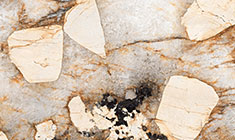
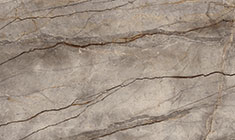
It has something both traditional and original at the same time. The central hood and the horseshoe-shaped counter may recall kitchens from a long time ago, but the black tiles from the Crogiolo Lume collection immediately transport us to a more contemporary context. I rarely see black kitchens, so I absolutely didn’t want to miss the chance to explore this possibility—and there’s also a practical advantage, since with a black kitchen, even complete disorder is less noticeable. The texture of the tiles is fantastic; they convey a truly unique sense of warmth. For the floor, I chose Mystone Limestone Sand, to balance the dark tones of the rest of the kitchen with a light color. For the counter and shelves, I opted for the collection of large-format porcelain stoneware slabs that recall the beauty of stone.

What choices did you make for the bedroom?
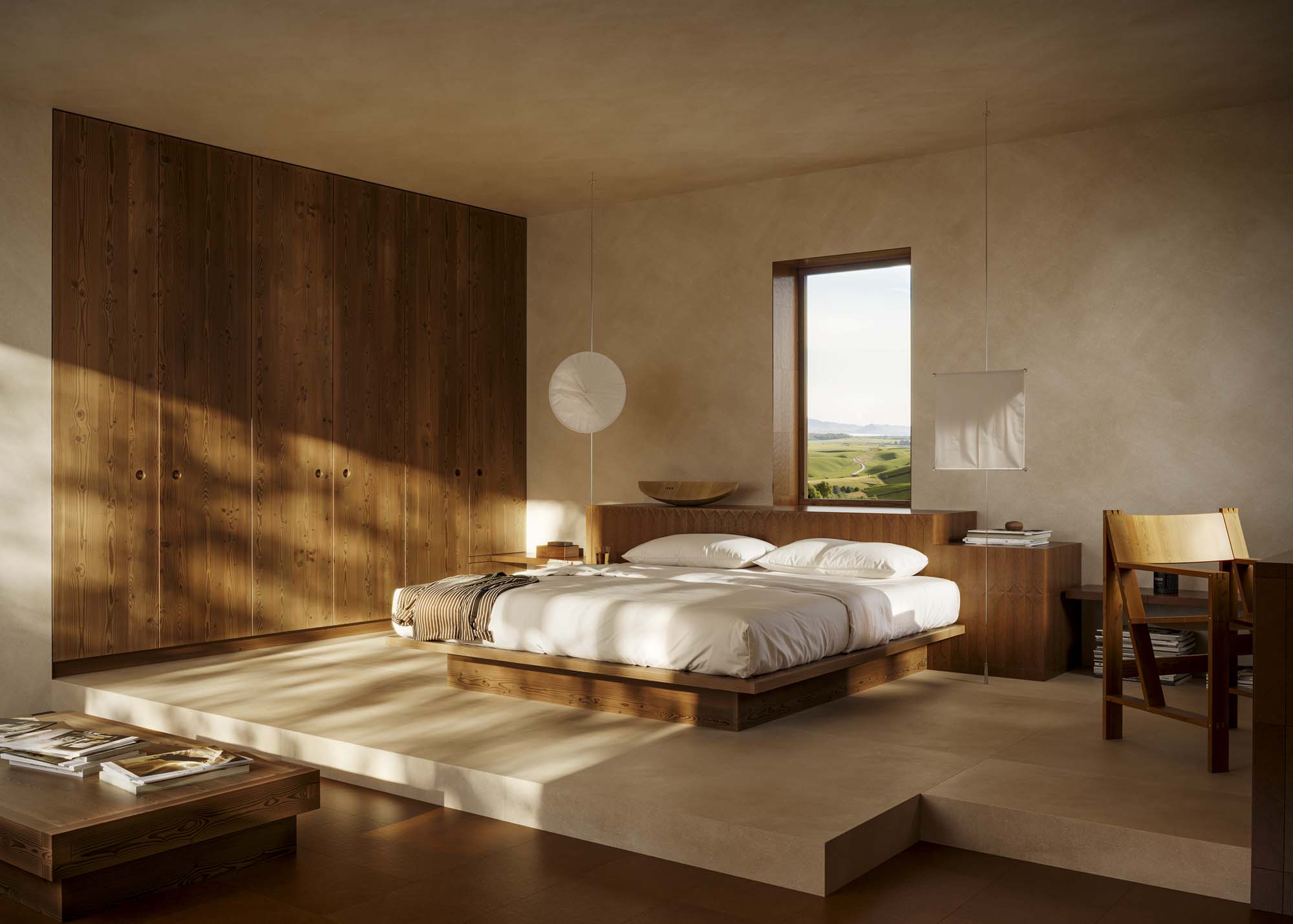
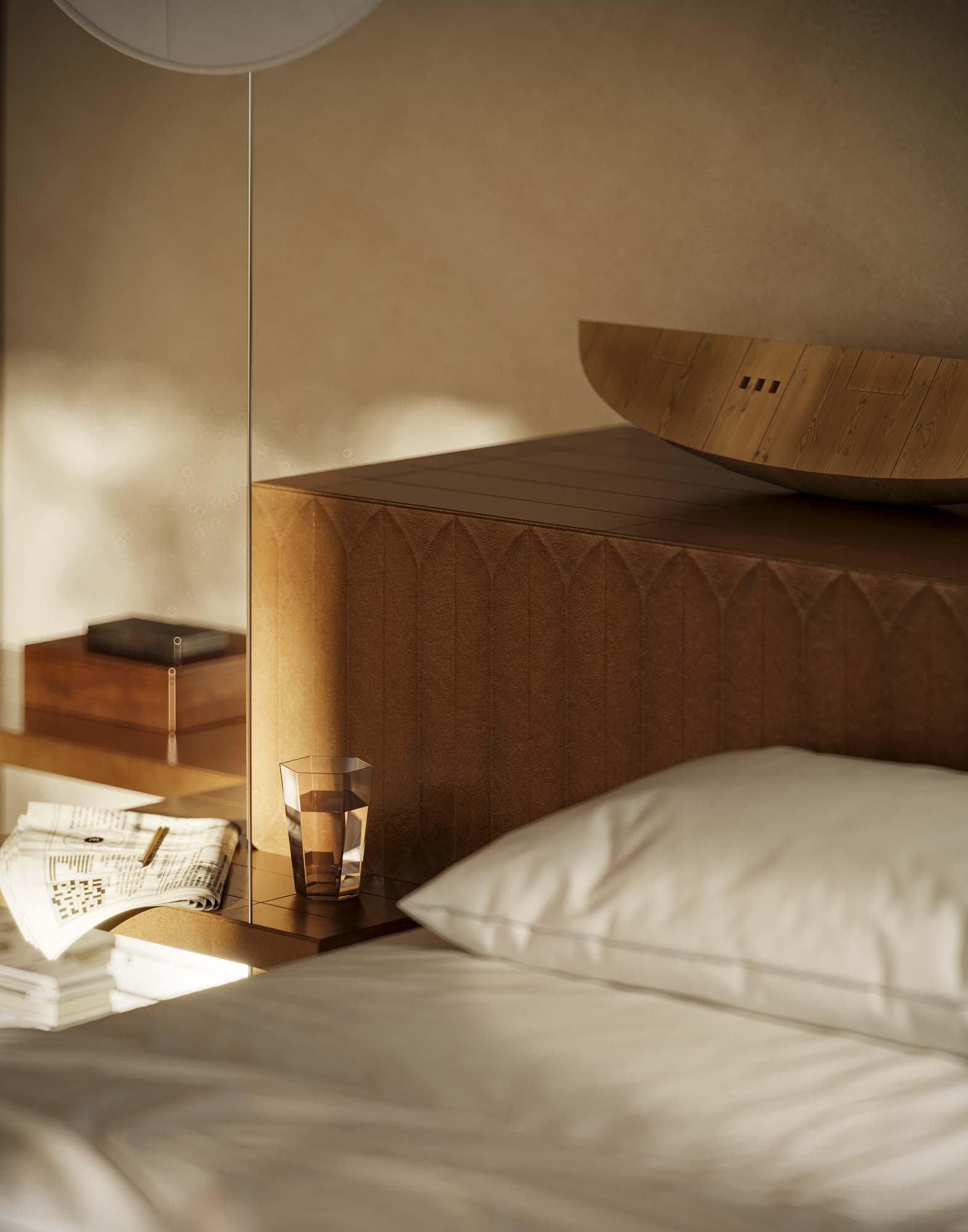
I incorporated Crogiolo Terramater Cotto tiles into the headboard, then extended them to the shelf, the desk, and the floor. In the wall opposite the bed, there is a bench made with the same material, which thus harmoniously runs through the architecture of this room. Of all the rooms in the house, this is where I used the tiles with the most pronounced texture, because it’s a sacred, intimate, calm space. Elsewhere you may not feel the need for such a personal touch, but in the bedroom it’s nice to have this level of detail.
And the bathroom?
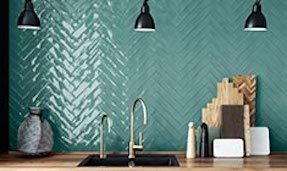
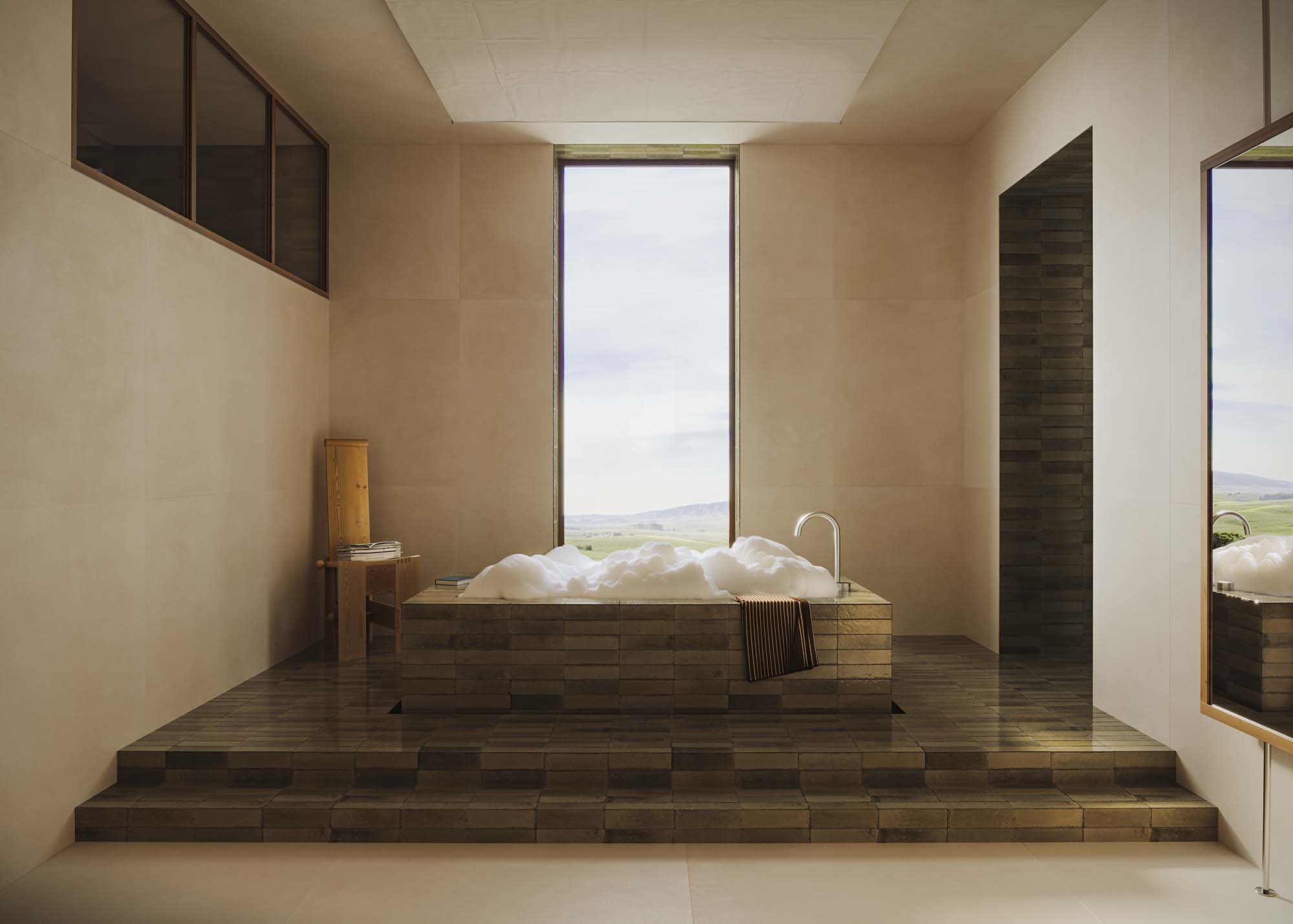
There is a compact tub, covered with tiles, that connects smoothly to the shower. For the color, the most obvious choice would have been blue. But these green rectangular tiles—from the Crogiolo Lume collection—instantly caught my eye for their beauty; they have extraordinary tones and shades. Looking at the landscape outside, I thought that the green, bouncing off the tiles and the water, would create a truly stunning space. The glossy finish I chose for the tiles is meant, on the one hand, to enhance the play of light and reflections, and on the other, to convey a sense of hygiene and cleanliness.
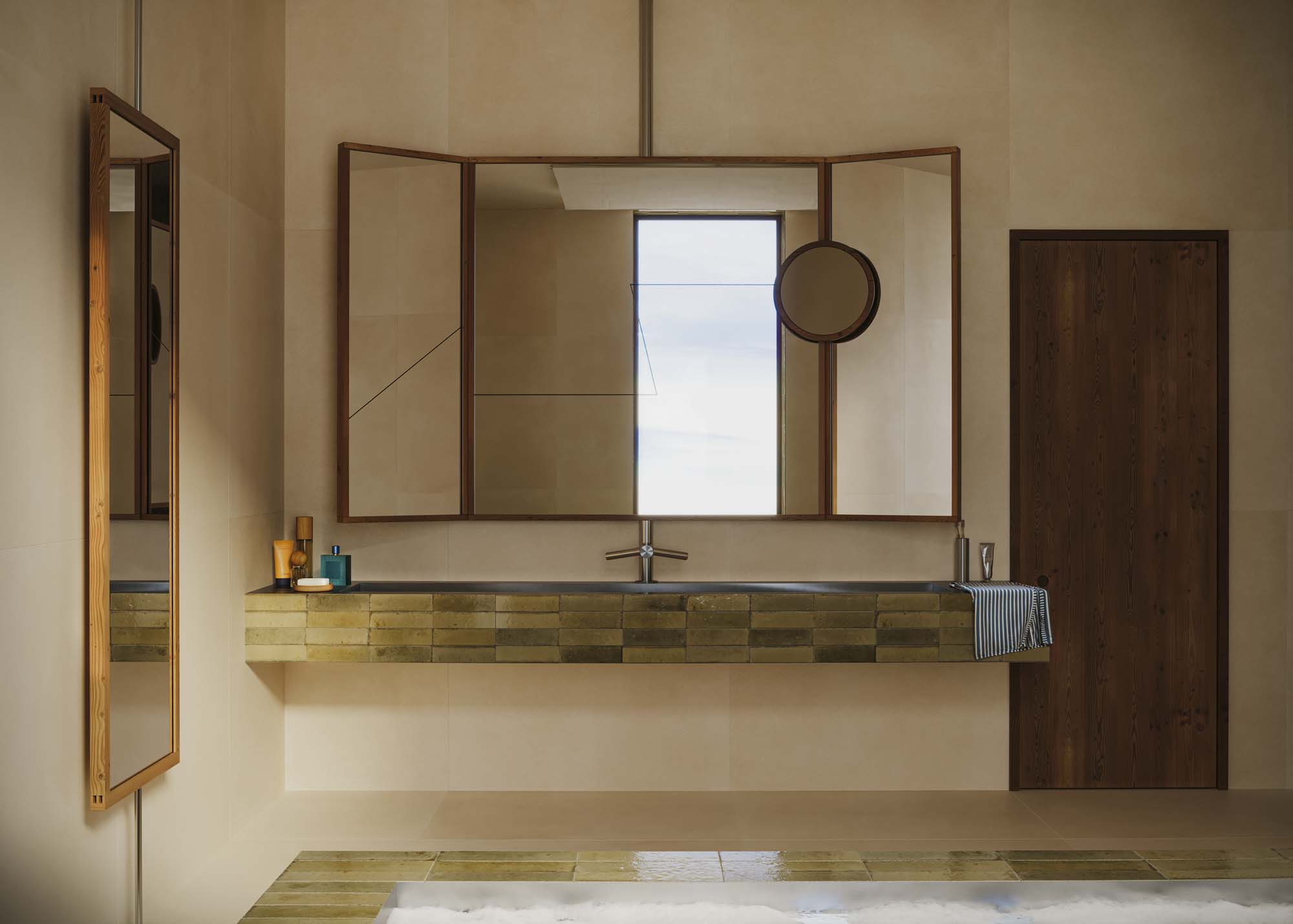
Ok, now let’s go outside.
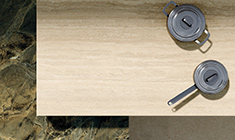
The exterior is inspired by a series of places I visited in Italy, particularly among the hills of Tuscany. With the descending steps and wide open spaces, I wanted to evoke a Mediterranean atmosphere and a certain lifestyle. Through the pool, the architecture of the house blends with the landscape, and the boundaries between indoors and outdoors become blurred. From the bench in Mystone Travertino20 Navona, an extra-thick outdoor porcelain stoneware, you move to the steps and then descend to the water, all in a harmonious, seamless transition.

Who do you imagine living in this house?
Probably an architect or an art collector. I always tend to create fictional characters when I design imaginary houses. Imagination plays a crucial role when I have to transform a space—whether it really exists or just in my mind—into something tangible, connected to the human dimension. I think human design is about understanding who the people living in a certain space will be, and making that space structured enough to ensure the comfort they desire, and flexible enough to allow them to make it their own. Spaces should take shape, adapt, and grow through the people who inhabit them.